Furnished Rental Preparation That Protects Your Home
 allurahomesNovember 6, 20268 min read

A furnished monthly rental can look ready long before it is ready to perform. The bed is made, the sofa is in place, and the photos may be attractive. But furnished rental preparation is really about a tougher standard: can the home support someone’s ordinary life for 30 days or more without creating avoidable wear, guest frustration, or expensive owner surprises?
For owners considering a furnished-monthly strategy, that question matters more than a decorative refresh. A well-prepared home earns trust from better-fit guests, gives the house a fair chance to stay in good condition, and makes the economics easier to evaluate honestly. Distinguished by Design starts with the details that hold up after move-in, not just the ones that photograph well.
What Changes When a Guest Stays for a Month?
A short-stay guest may overlook a shallow kitchen drawer or a weak Wi-Fi signal. A monthly guest will find it on day one and live with it every day. They will cook real meals, receive packages, work from the home, wash bedding, use closets, and notice if the lighting, seating, and storage do not support daily routines.
That is the central tradeoff in furnished monthly rentals. The home may have fewer turnovers than a typical short-stay operation, but each reservation carries more weight. A mismatch can mean a more disruptive mid-stay service issue, an unhappy guest with limited alternatives, or a house that takes more wear than the rate justified.
In some communities, a 30-night minimum may also be the more appropriate path because of local rules, permits, or HOA restrictions. That does not make furnished monthly a fallback. It is a distinct operating model, and it deserves a setup built for its actual guest.
Napa Cork & Cottage operates on a 30-night minimum, a useful reminder that a successful furnished rental does not need to imitate a weekend-oriented vacation home. The preparation should reflect how guests will use the property and what the local market can support.
Start With the House, Not the Shopping List
Before buying linens or another accent chair, walk the property as a resident would. Open every cabinet. Sit at the dining table with a laptop. Stand in the shower. Test the bedroom shades at night. Try the internet connection from the room most likely to become an office.
This walkthrough often reveals that the highest-value work is not glamorous. A reliable lock, quiet ceiling fan, properly anchored towel bar, and clear parking plan can matter more to a month-long guest than a newly styled bookshelf. Owners sometimes spend heavily on furnishings while postponing small maintenance items that shape the entire stay.
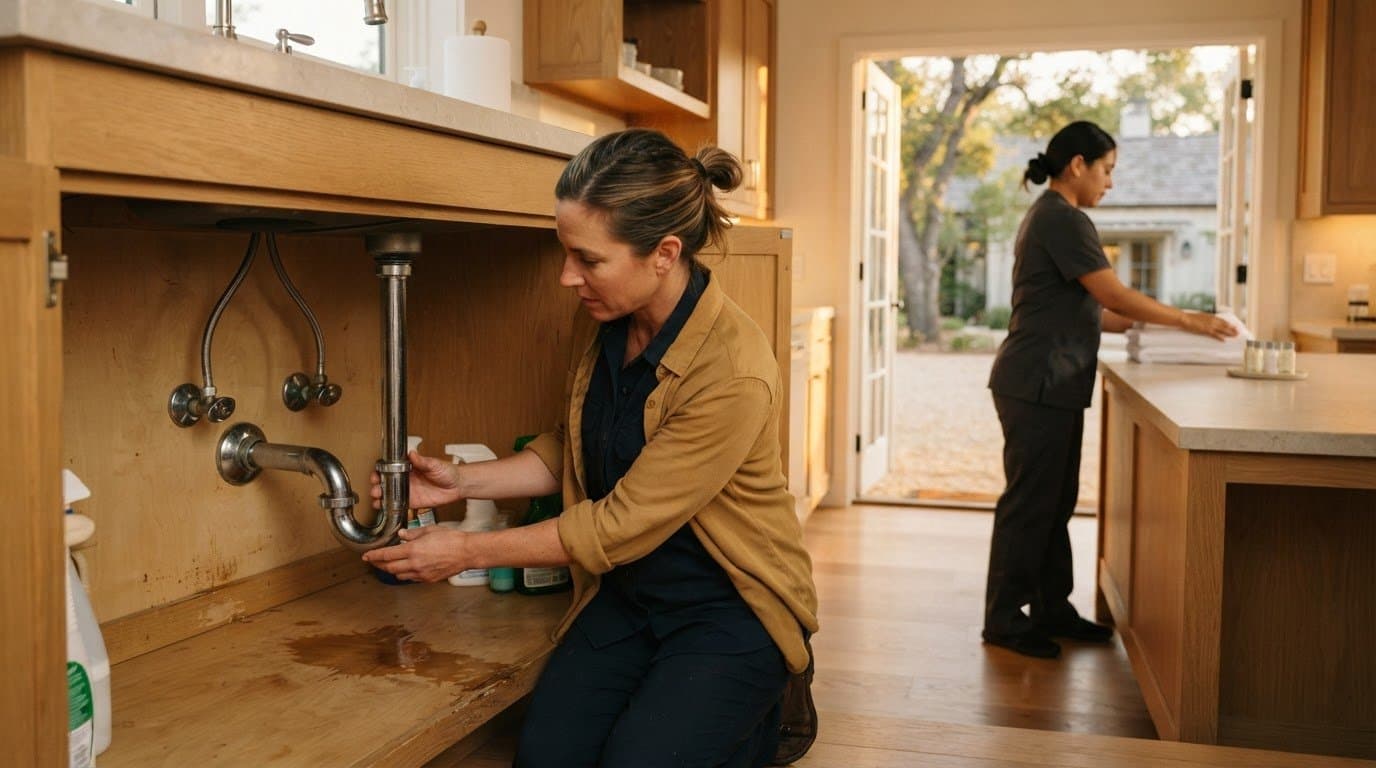
Address deferred maintenance first. Look for sticky doors, loose hardware, slow drains, inconsistent water pressure, aging caulk, window problems, and appliances that work only if someone knows their quirks. If an item is near the end of its useful life, decide before launch whether it should be replaced. Waiting until a guest is living in the home usually narrows your options and raises the cost of disruption.
This is also the time to define what should remain owner-only. A locked owner closet is sensible. So is removing irreplaceable art, family photos, fragile collectibles, and personal documents. The goal is not to make the home impersonal. It is to separate what guests need from what you would regret having handled, moved, or damaged.
Furnished Rental Preparation Needs Real-Life Function
A monthly guest is not looking for a showroom. They need enough of the right things, in the right places, without so much inventory that the home becomes difficult to inspect and maintain.
The kitchen deserves particular attention. Provide cookware that can handle regular use, sharp knives in safe condition, food-storage containers, a dependable coffee setup, basic serving pieces, and enough dishes for the home’s practical occupancy. A beautiful kitchen with one worn skillet and mismatched glassware sends the wrong message quickly.
Bedrooms need more than an attractive bed frame. Choose a supportive mattress, usable bedside lighting, blackout or privacy-capable window coverings, hangers, drawers or closet space, and spare bedding stored neatly. If the home sleeps several people, make sure every sleeping area has a credible place for luggage, clothing, and charging devices.
Living spaces should answer a simple question: where does a person comfortably spend a Tuesday evening? A sofa that photographs well but does not seat the listed occupancy is a poor fit. The same goes for dining tables that cannot support meals or work, outdoor furniture that is too delicate for daily use, and rugs that show every bit of tracked-in sand or pet hair.
For a home likely to attract remote workers, provide a real work surface and a supportive chair where practical. A tiny decorative desk in a dark bedroom will not meet the need. It may be better to designate one strong workspace than to imply several weak ones.
Build the Operating System Before the First Reservation
The physical setup is only half of furnished rental preparation. The other half is the operating system behind it: clear expectations, dependable access, responsive maintenance, and documented condition.
Start with a practical home manual. It should explain Wi-Fi, trash and recycling, parking, heating and cooling, appliances, outdoor areas, mail or package procedures, and any property-specific rules. Keep the tone straightforward. Guests do not need a novel, but they should not have to text for basic instructions either.
Then establish a condition baseline. Professional arrival photos, an inventory that focuses on meaningful items, and a consistent inspection process help distinguish normal use from a maintenance concern. For furnished monthly stays, inspections and service arrangements should be considered carefully and communicated clearly within the booking terms and applicable rules. Privacy matters, and so does protecting the home.
A useful operating checklist includes:
- tested Wi-Fi, smart locks, smoke and carbon monoxide alarms, and major appliances;
- clear instructions for parking, trash, HVAC, pool or spa equipment, and emergency shutoffs;
- stocked consumables for arrival, with a defined plan for replenishment rather than an unlimited promise;
- vendor contacts for urgent plumbing, electrical, HVAC, and cleaning needs; and
- a documented inspection standard for before arrival, during the stay when appropriate, and after departure.
The right level of inventory depends on the home and reservation length. Overstocking can create waste and make cleaning harder. Understocking shifts ordinary operating friction onto the guest. The practical middle ground is to provide a strong arrival setup, state what is supplied, and maintain the house consistently.
Price the Whole Stay, Not Just the Calendar
Preparation and pricing are connected. A home equipped for longer stays may justify a stronger guest experience, but it also has different costs: utilities, furnishing replacement, cleaning depth, maintenance access, and potential vacancy between longer booking windows.
Owners should compare net results, not just a headline monthly rate. A lower rate with a well-qualified guest and fewer operational issues can be preferable to a higher number that overlooks utility exposure, weak screening, or a home that returns in poor condition. There is no universal answer because seasonality, location, furnishing quality, HOA requirements, and demand all change the equation.
Be candid about utility policies, pet terms, occupancy limits, and cleaning expectations before a guest books. Ambiguity rarely helps either side. A monthly renter who understands the home’s rules is more likely to treat it as a temporary residence rather than a hotel room with no boundaries.
Do Not Treat Compliance as a Last-Minute Detail
For California owners, the permissible rental term can be shaped by city requirements, taxes, lease rules, insurance, and HOA documents. A 30-night minimum may change the framework, but it does not remove the need to verify what applies to your address and operating plan.
Review your governing documents, local requirements, and insurance coverage before publishing the home. Ask qualified local professionals when the rule or contract language is unclear. A manager can help organize the operational questions, but property-specific legal and tax advice belongs with the appropriate advisor.
This step is especially valuable for accidental landlords. If a home became available because of a move, inheritance, or changing family plans, it is tempting to furnish it quickly and see what happens. A more deliberate launch protects your choices later. You can decide what kind of guest the property is designed for, what terms you can support, and how the home fits your broader ownership goals.
Prepare for the Guest You Want to Keep
Good furnished monthly guests tend to value clarity, condition, and responsiveness. They notice when a home has been thoughtfully prepared, but they also notice when its systems are improvised. The best preparation is not about adding more. It is about removing uncertainty for the guest and preventable risk for the owner.
Before accepting the first stay, spend one final evening in the house with the owner’s eye and the guest’s routine in mind. Make coffee, charge a phone, take out the trash, use the shower, lock up, and imagine doing it again for 30 days. The remaining gaps will usually tell you where preparation still matters.
If you are weighing furnished monthly use for a distinctive California home, talk with Allura about the property. A candid review of its condition, rules, and likely operating fit is a better starting point than a rushed listing.
Related Articles
Continue reading about this topic.


Need Help Managing Your Rental?
Our team has 13+ years of experience improving revenue for California vacation rental owners.