Vacation Home Management Services: The 2026 Homeowner Guide
 allurahomesSeptember 22, 202613 min read
Relying on corporate algorithms and remote call centers will never protect a premier property. High-tier real estate demands attentive, boots-on-the-ground stewardship. If you are fielding guest messages at midnight, coordinating urgent maintenance, or worrying about unmonitored wear and tear, you already understand the friction of self-hosting. Securing professional vacation home management services should eliminate that operational strain, not introduce detached corporate bureaucracy.
You acquired a high-end retreat for personal enjoyment and long-term asset growth, not to spend weekends deciphering shifting municipal permits or managing turnover logistics. You deserve absolute peace of mind alongside optimal financial performance. Discover how comprehensive vacation home management protects your high-end property while improving net rental income through dedicated local oversight. Ahead, we break down what full-service stewardship truly includes, how high-touch curation outperforms automated platforms, and the regulatory standards required to safeguard your investment.
Key Takeaways
- Distinguish comprehensive vacation home management services from basic software tools to understand how hands-on stewardship safeguards physical property equity.
- Discover how multi-channel distribution across premier platforms and direct booking channels drives consistent occupancy and optimizes your net rental revenue.
- Compare boutique management teams, national corporate aggregators, and self-hosting to evaluate which model delivers superior asset care and transparent communication.
- Review a structured framework for managing municipal short-term rental compliance, strict licensing requirements, and lodging taxes across regulated destinations.
- Learn the essential vetting questions every homeowner should ask regarding vendor markups, repair thresholds, and listing ownership before signing an agreement.
What Are Full-Service Vacation Home Management Services?
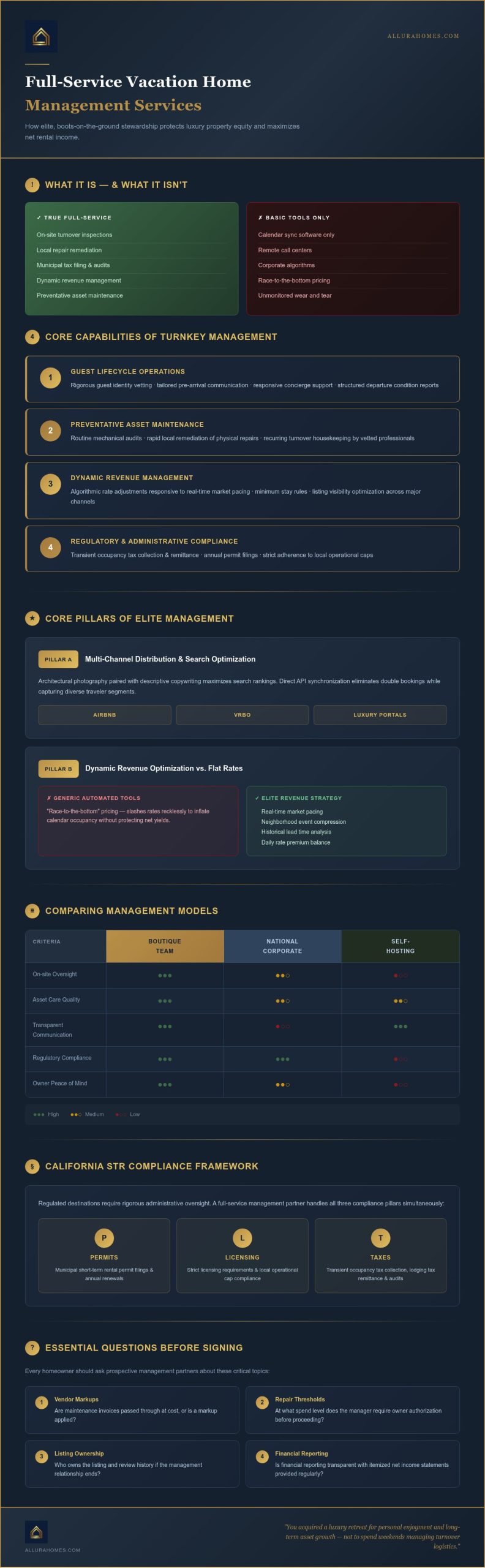
True full-service vacation home management services encompass end-to-end asset stewardship, uniting dynamic revenue strategy, boots-on-the-ground operations, and strict regulatory compliance into a unified system. Property owners often confuse management with channel syndicators or booking software that merely synchronize calendar dates. While automation distributes listings, it cannot perform on-site turnover inspections, replace a faulty pool heater, or audit municipal tax filings. Comprehensive stewardship bridges digital distribution and physical maintenance, protecting long-term real estate equity while delivering dependable passive yields. As outlined in this vacation rental management industry overview, the sector has evolved from simple property marketing into sophisticated operational oversight. For an in-depth breakdown of these operational frameworks, explore our guide to full service vacation rental management.
The Evolution from Basic Hosting to Asset Stewardship
Core Capabilities Included in Turnkey Management
A comprehensive partner oversees every operational variable, eliminating the burdens of day-to-day hosting:
- Guest Lifecycle Operations: Rigorous guest identity vetting, tailored pre-arrival communication, responsive concierge support, and structured departure condition reports.
- Preventative Asset Maintenance: Routine mechanical audits, rapid local remediation of physical repairs, and recurring turnover housekeeping handled by vetted professionals.
- Dynamic Revenue Management: Algorithmic rate adjustments responsive to real-time market pacing, minimum stay rules, and listing visibility optimization across major channels.
- Administrative and Regulatory Compliance: Flawless collection and remittance of transient occupancy taxes, annual permit filings, and strict adherence to local operational caps.
Core Pillars of Elite Vacation Rental Property Management
Sustained profitability requires operational precision across multiple disciplines. Elite vacation home management services elevate your residence above standard inventory by orchestrating visibility, yield management, and property care into a seamless strategy. Rather than treating bookings as isolated transactions, top-tier management views your home as a high-value asset requiring rigorous upkeep and calibrated market positioning. For an actionable asset preservation blueprint, explore our guide on how to manage vacation rental maintenance.
Multi-Channel Distribution and Search Optimization
High booking velocity begins with visibility. Professional management pairs architectural photography with descriptive copywriting to improve search rankings across Airbnb, Vrbo, and private high-end booking portals. Direct API synchronization links your calendar across channels, eliminating double bookings while capturing diverse traveler segments. Review our deep-dive on vacation rental multi-channel distribution strategy to see how multi-platform mechanics expand your reach.
Dynamic Revenue Optimization vs. Flat Rates
Generic automated tools like platform smart pricing often slash rates recklessly just to inflate calendar occupancy. High-performance revenue strategy rejects race-to-the-bottom pricing. Instead, experienced revenue managers analyze real-time market pacing, neighborhood event compression, and historical lead times. By balancing daily rate premiums against physical property wear, this approach protects net yields without unnecessary foot traffic. To understand regional rate levers, consult our guide on vacation rental revenue management strategy California.
Meticulous Housekeeping and Preventative Property Maintenance
Protecting a premium home demands rigorous turnover standards. Dedicated cleaning crews execute comprehensive checklists aligned with Vacation Rental Management Association standards, using professional linen programs and sanitization protocols. Beyond cleaning, preventative maintenance audits catch minor mechanical issues before they disrupt guest stays:
- Smart lock battery audits, HVAC filter changes, and pool equipment balancing between every guest stay.
- Pre-arrival functional checks of Wi-Fi networks, entertainment systems, and major kitchen appliances.
- Established local vendor networks providing rapid repairs without inflated retail surcharges.
Partnering with a seasoned team like Allura Homes ensures your residence benefits from tailored, local stewardship rather than detached corporate oversight.
Comparing Management Models: Boutique Teams, Corporate Giants, and Self-Hosting
Selecting the right operational model determines whether your second home functions as an effortless financial asset or an exhausting second job. High-end property owners generally evaluate three pathways: national corporate aggregators, complete DIY self-hosting, or specialized boutique firms. While each model promises returns, their approaches to physical asset preservation, guest communication, and net profitability diverge significantly. Evaluating these models against rigorous operational criteria clarifies true long-term value, as detailed in our guide examining is a vacation rental profitable in California.
The Limitations of Mass-Market National Aggregators
National vacation rental platforms rely on volume-driven algorithms and centralized call centers. When an urgent leak occurs or an unapproved gathering begins, remote agents in another time zone lack the local authority to intervene immediately. High property-to-manager ratios frequently lead to deferred maintenance, while rotating cleaning contractors miss property-specific staging details and architectural nuances. Homes under corporate management often suffer excessive wear because volume targets take priority over selective guest screening.
The Realities and Hidden Burdens of DIY Self-Hosting
Managing a high-end home independently promises complete autonomy, but it introduces heavy personal friction. Self-hosting demands continuous operational availability, requiring 10 to 15 hours per week spent vetting inquiries, coordinating turnover crews, and monitoring supplies. Midnight lockouts and mid-stay appliance breakdowns inevitably pull you away from family or professional commitments. Without programmatic pricing and distribution tools, self-hosts often misprice peak seasons or leave unbooked calendar gaps, negating any savings from avoiding management fees.
The Boutique Advantage: Dedicated Accountability and Local Care
- Direct Communication: You have a single, senior point of contact rather than navigating bureaucratic ticketing queues or call centers.
- Curated Guest Vetting: In-depth guest screening attracts mature travelers, executive retreats, and quiet family gatherings while barring destructive party groups.
- Rapid Local Dispatch: Local teams resolve maintenance items swiftly and ensure strict adherence to municipal frameworks, including California short-term rental licensing and compliance guidelines.
Navigating California STR Compliance, Permitting, and Local Regulations
Operating a short-term rental in California requires navigating a patchwork of municipal rules, zoning laws, and tax codes. Without statewide standardization, operating legality rests entirely on municipal decisions. From lottery licensing systems in coastal markets to strict contract limits in the desert, compliance errors can lead to immediate operational shutdowns and steep fines. Professional vacation home management services protect your asset by managing regional regulations directly, turning legal obligations into structured operational standards.
Zoning Verification, Permitting Caps, and License Acquisition
Every destination enforces distinct regulatory boundaries. San Diego regulates short-term residential occupancy through a four-tier licensing system, where whole-home rentals are capped by neighborhood planning areas through competitive lotteries. Palm Springs permits secondary home rentals without primary-residence mandates, but it enforces a 20 percent neighborhood density cap and limits properties to 36 rental contracts per calendar year. In wine regions like Napa, Sonoma, and Riverside County, rural agricultural zoning presents unique operational hurdles. To understand rural ordinances, consult our breakdown of Temecula short term rental laws.
Guest Screening, Noise Monitoring, and Good-Neighbor Policies
Mitigating neighborhood friction is critical to maintaining a valid operating license. Elite management utilizes a proactive four-step framework:
- Identity Verification: Multi-point guest background audits filter out unauthorized parties before reservations are accepted.
- Decibel Monitoring Hardware: 100 percent privacy-compliant sensors measure interior and exterior sound levels in real time, alerting teams to potential noise spikes before neighbors are disturbed.
- Rapid Local Dispatch: California jurisdictions often mandate an in-person representative who can respond quickly to resolve on-site concerns.
- Good-Neighbor Briefings: Guests sign clear agreements outlining street-parking rules, trash containment schedules, and quiet hours.
Lodging Tax Administration and Continuous Regulatory Auditing
Beyond initial permitting, ongoing compliance requires disciplined tax remittance and regulatory tracking. Transient Occupancy Tax (TOT) rates vary significantly, ranging from 10.5 percent in parts of San Diego to 14 percent in San Francisco and Los Angeles. State measures like Senate Bill 346 have introduced direct platform data sharing with local governments, meaning unregistered properties and unpaid lodging taxes are quickly flagged. Comprehensive management tracks council agendas, monitors renewal deadlines, and files monthly returns to keep your home fully compliant.
To safeguard your investment across California’s top leisure markets, partner with Allura Homes for turnkey STR compliance and management.
How to Choose the Right Vacation Home Management Partner
Entrusting a multi-million-dollar residence to an outside operator is an important investment decision. Flashy marketing presentations often mask operational deficiencies that only surface once contracts are executed. Discerning homeowners must look beyond surface promises and rigorously examine an operator’s staffing structure, contract flexibility, and reporting transparency. Selecting the right vacation home management services requires vetting potential partners on how they protect your balance sheet and your physical home.
Essential Vetting Questions for Prospective Managers
Before signing an agreement, request clear answers to these critical operational questions:
- What is your property-to-staff ratio? When a single field manager oversees dozens of residences, preventative maintenance gets neglected. High-touch care requires strict portfolio caps.
- Who handles physical maintenance emergencies? Clarify whether on-site issues trigger immediate dispatch of local staff or get routed through an out-of-area answering service.
- Do you apply surcharges to third-party vendor invoices? Many corporate operators mark up contractor invoices by 15 to 20 percent. Insist on pass-through contractor billing with zero markup.
- What are your repair authorization limits? Establish clear financial thresholds requiring your prior written consent before non-emergency repairs proceed.
Analyzing Revenue Projections and Contract Terms
Distinguish between inflated sales projections and data-backed pro-forma financial models. Unrealistic pro-formas often assume unachievable occupancy rates while ignoring seasonal shoulder periods and local stay caps. Demand historical performance data from comparable properties in your immediate neighborhood. Scrutinize the management agreement for hidden fees, such as administrative onboarding charges or mandatory supply subscriptions. Ensure the contract honors your personal use with flexible owner-stay policies, reasonable cancellation windows, and no blackout dates.
The Allura Homes Approach to High-Yield Stewardship
Founded circa 2011 with 13+ years of high-end hospitality experience, Allura Homes delivers bespoke property management across California’s premier destinations, including San Diego, Temecula, Palm Springs, Napa, and Sonoma. We blend dynamic revenue strategy with uncompromising on-site stewardship, protecting custom architecture and fine furnishings while optimizing net returns. By pairing sophisticated market analytics with hands-on local care, we ensure your high-end residence thrives as an effortless financial asset.
Protect Your Investment with High-Touch Stewardship
Owning a premier California vacation retreat shouldn’t feel like running a full-time logistics company. As municipal regulations tighten and traveler expectations rise—shaped by modern hospitality and accommodation providers like ParcBlu—sustained profitability requires hands-on accountability rather than distant corporate algorithms. Comprehensive vacation home management services bridge this divide, pairing meticulous physical asset preservation and complete legal compliance with optimized net revenue.
Founded circa 2011 with over 13 years of high-end hospitality experience, Allura Homes provides dedicated regional expertise across San Diego, Temecula, Palm Springs, Napa, and Sonoma. We oversee every operational detail, combining multi-channel listing optimization and turnkey short-term rental permitting with white-glove preventative maintenance. You can enjoy your second home freely while our team ensures it performs at its highest financial potential. Take the next step toward effortless ownership: Request a Bespoke Revenue Analysis & Management Proposal to discover what thoughtful boutique stewardship can achieve for your property.
Frequently Asked Questions
How much do vacation home management services typically cost?
Vacation home management services are typically structured as a percentage commission based on rental revenue rather than fixed monthly retainers. Commission rates vary based on property location, home size, and operational scope, distinguishing digital-only marketing from comprehensive on-the-ground management. Discerning homeowners should verify whether fees are calculated against gross booking revenue or net nightly rent, while ensuring maintenance invoices don’t carry hidden contractor markups.
Is hiring a vacation home management company worth the investment?
Hiring an experienced management company is well worth the investment because it protects physical property equity while driving higher net returns. Professional operators deploy dynamic pricing analytics and multi-channel listing syndication that consistently outperform manual hosting. Beyond revenue gains, dedicated management eliminates operational fatigue, handles midnight emergencies, enforces guest vetting, and safeguards your legal standing across heavily regulated California destinations.
What happens if a vacation rental guest damages my property?
A professional management partner resolves property damage through strict pre-stay identity vetting, security deposits, and structured damage protection programs. Rigorous departure inspections document the home’s condition with high-resolution photographic evidence immediately after checkout. When damage occurs, the local management team coordinates repairs with vetted contractors, files administrative claims, and recovers costs without disrupting your upcoming guest calendar.
Can I still use my vacation home for personal stays if it is managed?
Yes, reputable management agreements protect your right to reserve your property for personal vacations and family visits. Quality boutique partners provide a dedicated owner portal where you can block personal dates instantly without restrictive blackout windows. Your property is prepped to white-glove hospitality standards prior to your arrival and thoroughly cleaned after departure, keeping your retreat effortless.
How do property managers handle short-term rental permits and local taxes?
Full-service managers navigate municipal licensing applications, track renewal deadlines, and manage lodging tax compliance directly with local authorities. California destinations enforce rigorous rules, from San Diego’s tiered licenses to Palm Springs’ contract caps and county lodging taxes in Temecula, Napa, and Sonoma. Professional operators monitor municipal code updates, collect required Transient Occupancy Tax from each reservation, and remit monthly filings to maintain compliance.
What is the difference between a boutique manager and a national vacation rental agency?
How do managers determine the optimal nightly rate for my high-end home?
Optimal nightly pricing is determined through dynamic market analysis combining hyper-local demand data, pacing metrics, and seasonal compression events. Rather than relying on static calendar rates or generic automated discounts, revenue specialists evaluate booking lead times, neighborhood competition, and regional event schedules. This tailored approach improves average daily rates during peak travel periods while protecting occupancy and minimizing unnecessary property wear.
Related Articles
Continue reading about this topic.



Need Help Managing Your Rental?
Our team has 13+ years of experience improving revenue for California vacation rental owners.