Vacation Rental Property Inspection Checklist for Hosts
 allurahomesNovember 24, 202611 min read
A vacation rental property inspection checklist is a repeatable way to assess a home’s condition and readiness for guests. It should cover bedrooms, bathrooms, appliances, entertainment systems, supplies, and visible maintenance issues. Regular inspections help identify problems before they affect a stay.
Cleanliness is only part of a dependable guest experience. Working equipment and well-stocked essentials matter, too. A consistent inspection helps you spot and record what needs attention instead of relying on memory between stays.
This guide explains what to inspect in key areas and how routine checks support a safer, more comfortable rental. Use the practical checklist to make each property review thorough and repeatable.
Key Takeaways
- Use a room-by-room routine to catch issues in bedrooms and bathrooms before they affect a guest’s stay.
- Test appliances and entertainment systems, and confirm essential kitchen items are ready to use.
- Include smoke and carbon monoxide alarms, air filters, plumbing, and electrical systems in ongoing checks.
- Record inspection findings and follow-up needs so recurring maintenance is easier to plan and track.
Appliance and entertainment system testing
Test kitchen appliances through a complete operating cycle, not just a quick visual check. Confirm controls respond, doors close securely, and there are no visible leaks or unusual noises. Record each fault and the affected appliance so follow-up work addresses the right issue.
- Run the refrigerator and confirm it cools; set it to 37-40°F. This temperature range is recommended for vacation rental refrigerators.
- Test the oven, stovetop, and microwave using their controls. Brief operation confirms each appliance responds as expected.
- Run the dishwasher and check that it starts, completes a cycle, and drains. This can reveal problems a closed door hides.
- Count plates, glasses, cutlery, and cooking utensils against the kitchen inventory. Complete dining necessities let guests prepare and serve meals.
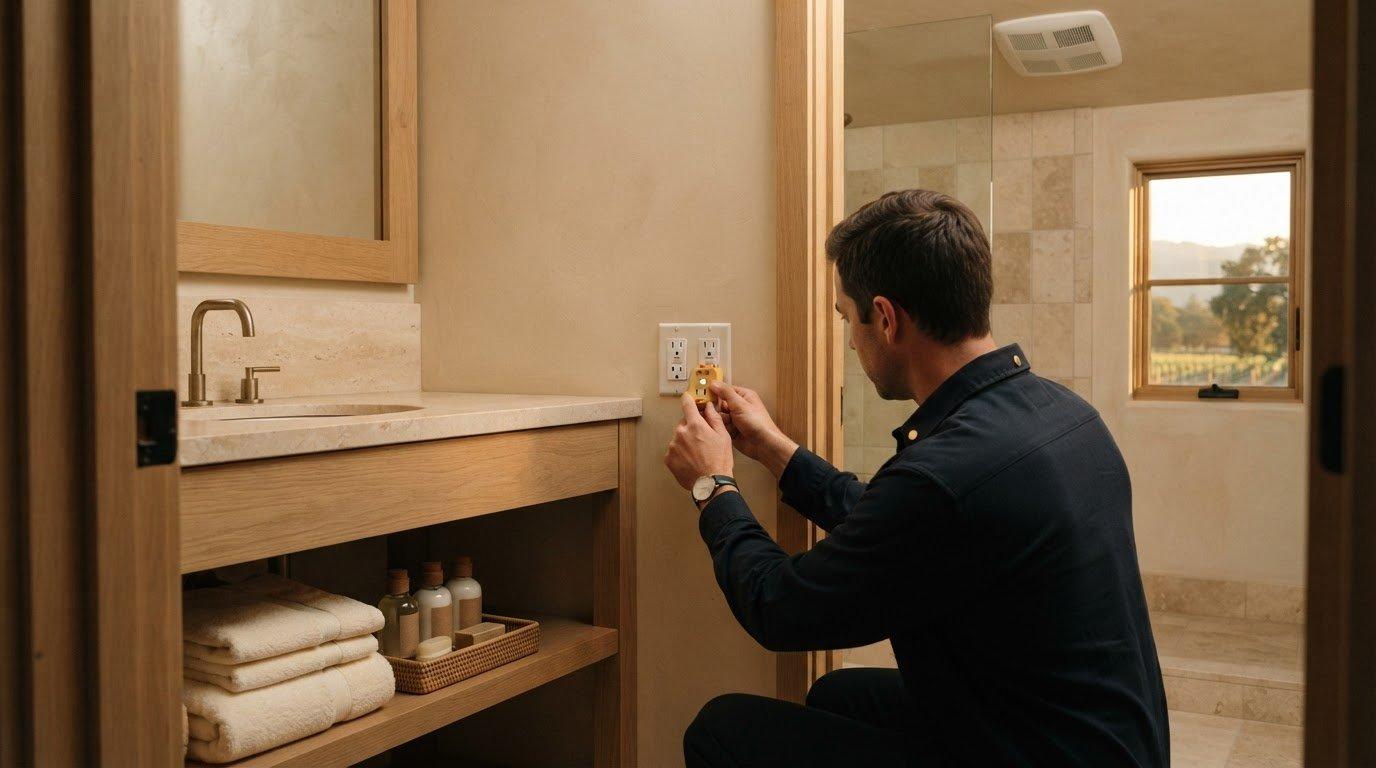
- Check kitchen and bathroom electrical outlets for GFCI protection. This safety feature is called for at outlets in these areas.
- Test small appliances such as the toaster and coffee maker. Confirm each powers on and has the parts needed for normal use.
- Turn on the television and test its remote, input selection, and entertainment systems. This catches missing accessories or connection issues before arrival.
- Check that remotes and necessary cables are easy to find near the equipment. Guests can use the system without searching through drawers.
- Record damaged cords, missing items, or appliances that fail a test. A clear note separates repair needs from restocking tasks.
Include outdoor spaces that guests use. Check that walkways are clear, steps are visible, and outdoor equipment appears intact. Record the location of any concern, such as a loose patio chair or damaged light cover. Keep these notes separate from appliance findings so maintenance can identify the right task and area.
Bathroom and bedroom condition and supplies
Check each bathroom’s fixtures, surfaces, and supplies. Run faucets and showers, flush the toilet, and watch for leaks or slow drainage. Confirm that lights and ventilation work, then inspect mirrors, towel bars, and shower curtains for damage. Refill toilet paper, hand soap, and clean towels. Note issues by room to keep repair and restocking tasks distinct.
- Test the sink, shower, and toilet in every bathroom. Look for drips beneath the sink and water that remains after draining.
- Check bathroom supplies, including toilet paper and paper towels. Replenish items that are low or missing before the next arrival.
- Inspect each bed’s linens for cleanliness, tears, and stains. Replace visibly soiled or damaged sheets before making the bed.
- Confirm pillows and blankets are available for the listed sleeping arrangements. This helps ensure the room setup matches the guest-facing description.
- Look through drawers, closets, and under beds for belongings left behind. Remove items from guest-ready spaces and record anything needing follow-up.
- Test the smoke alarm in each sleeping room. Record a failed alarm as a safety issue requiring prompt attention.
- Check beds, frames, and bedside furniture for visible damage or instability. Note loose parts or sharp edges that could affect safe use.
- Make sure bedroom exits and walkways are clear. Move luggage, baskets, or furniture that obstructs access to the door.
Finish with a room-by-room record of the property’s condition and any outstanding work. For example, list a leaking shower as a repair and missing towels as a restocking task. Check windows for easy operation and visible damage, and ensure curtains or blinds open and close properly. A concise note identifying the bedroom or bathroom helps the next turnover address each item without confusion.
What is a Vacation Rental Checklist?
A vacation rental checklist is a written record of recurring condition and safety checks. Organize observations by room or system to make follow-up easier to assign and track. Include the inspection date, inspector’s name, property name, and location so each report corresponds to the right visit.
For safety, test smoke and carbon monoxide alarms and confirm a fire extinguisher is accessible. Include the kitchen, bathrooms, appliances, HVAC, plumbing, and electrical systems in the review. Testing alarms during routine maintenance can reveal problems before guests arrive.
- Test smoke detectors and carbon monoxide alarms using their test controls. Record which device was tested and whether it responded.
- Check alarm placement and visible condition throughout the property. Note missing units, damage, or a device that doesn’t sound.
- Confirm a fire extinguisher is present and easy to reach. Record its location and any visible damage or obstruction.
- Inspect HVAC equipment and note the filter’s condition. Record whether it needs replacement and identify the system it serves.
- Run sinks, showers, and toilets, then look for visible plumbing concerns. Note leaks, slow drainage, or a toilet that continues running.
- Look over electrical outlets, switches, and visible cords for damage. Record the room and specific item needing attention.
- Test appliances and check kitchen and bathroom supplies. Separate equipment problems from missing items, such as detergent or soap.
- Use clear status labels, such as “working,” “needs repair,” or “restock.” Consistent wording helps different inspectors record findings clearly.
Leave space for observations, recommendations, photos, and next actions. For example, record a dripping faucet, photograph its location, and note whether the repair is still outstanding. A structured form connects each finding to follow-up, while the next inspection can show whether the issue was resolved. Keep completed records together by property to make recurring concerns and completed work easy to review.

Vacation rental inspection and checklist purpose
Inspection and licensing requirements vary by jurisdiction, so one checklist won’t cover every U.S. rental. Sarasota requires City staff to inspect before issuing an initial or renewed registration certificate; Fort Lauderdale requires violations corrected and reinspected within thirty calendar days.
Document each inspection with its date, inspector name, property name, and location. Include observations, recommendations, required actions, and photos; documenting at least eight areas adds 3 to 5 minutes to a post-cleaning inspection.
- Photograph conditions that need follow-up, such as a damaged window screen or water stain. Images help identify the location and track changes.
- Record each finding beside its required action. A note such as “repair loose door handle” gives maintenance a clear task.
- Reserve time once per month for maintenance checks. Monthly reviews can catch developing issues before the next guest arrival.
- Check doors, locks, and clear exit routes during monthly maintenance. These checks help identify access or evacuation concerns.
- Replace furnace and HVAC filters as part of routine maintenance. Clean filters support routine system upkeep.
- Inspect windows for sealant problems and damaged screens twice per year. Record repairs so weather exposure or pests don’t go unnoticed.
- Inspect the roof, foundation, brick pointing, and other structural features annually. Tracking condition helps surface changes that need attention.
- Schedule updates ahead of time and block the rental calendar accordingly. A planned repair window reduces disruption to reservations.
The checklist’s purpose is operational as well as protective: it turns observations into scheduled work and a property record. For example, if an inspection identifies a recurring plumbing issue, documented dates and photos help show whether repairs resolved it. Allura Homes’ Full-Service Vacation Rental Management can support owners seeking coordinated oversight of rental operations; explore vacation rental management.
Allura Homes: Full-Service Vacation Rental Management
Allura Homes provides full-service vacation rental management for owners who want coordinated support with rental operations. If overseeing the property alongside bookings and business decisions feels demanding, management can bring these responsibilities into a broader operating plan.
For owners assessing a rental’s investment potential, market analysis and revenue projections can inform strategy. Multi-channel listing optimization helps position a property across listing channels, while STR compliance and permitting services support regulatory and permitting needs.
These offerings may be relevant when you’re planning a rental, refining its performance, or managing ongoing responsibilities. Contact Allura Homes to discuss your vacation rental management needs.
Turn Inspection Findings Into Your Next Step
Treat the vacation rental property inspection checklist as a working tool for future decisions, not a form to file away. As the property and its operating goals evolve, review how findings are prioritized and who is responsible for follow-up. Regularly revisiting the process helps align it with the guest experience you want to offer and the investment decisions ahead.
Inspection records can help guide decisions about which improvements to prioritize, how to organize operating responsibilities, and where the rental strategy may need attention. Choose a review cadence that suits the way you manage the property, then keep decisions clear and documented. This creates a useful reference as you consider changes to the home or its operations.
To discuss how a broader management approach could support your rental, Contact Allura Homes today. A considered next step can help you move forward with greater clarity.
Frequently Asked Questions
Should you inspect every turnover or spot check?
Inspect every turnover while onboarding a new cleaner or property, then consider spot checks once performance is consistent. The recommended onboarding period is the first 30 to 60 days. After a cleaner consistently scores at least 95% on a property, spot checks can cover 25 to 30% of turnovers. Return to full inspections when results decline or concerns arise.
What should a post-cleaning inspection include?
Use consistent scoring, marking each checklist item 0, 1, or 2 points, so missed tasks are easy to identify across visits. Review cleaning quality and guest-ready presentation, then separate minor oversights from issues requiring repair. A post-cleaning inspection of a larger vacation rental takes 20 to 35 minutes, giving the reviewer time to assess the property without rushing through rooms.
What should be included in a vacation rental property inspection checklist?
Give each item a clear result, such as pass, needs attention, or not applicable, with space for notes and follow-up status. Group checks by room or system so the inspector can work through the property consistently. Distinguish urgent safety concerns from routine upkeep and restocking to help the team assign the right next step instead of treating every finding alike.
How often should vacation rental properties be inspected?
Use turnover reviews to assess guest readiness and schedule separate inspections for planned maintenance. Add a review after significant work, an extended vacancy, or an event that may have affected the property. The appropriate cadence also depends on local registration or inspection rules, so organize recurring checks around operating needs and applicable requirements in your jurisdiction.
What should hosts inspect between guest stays?
Look beyond the rooms: confirm garbage pickup is active, remove debris, and check for signs of infestation. If the property has a driveway, make sure vehicles can access it. Inspect the garage for its intended use and flooring condition. These exterior and service checks can reveal problems a room-by-room turnover walkthrough might miss.
What are the most common maintenance issues to check in a vacation rental?
Watch for trip hazards such as uneven pavement or unmarked steps, as well as signs of wear around the property’s structure. If the home has a hot tub, review its cover and wiring, and follow the manufacturer’s maintenance recommendations. Pay attention to water heaters and other heating equipment if their operation or visible condition changes.
Related Articles
Continue reading about this topic.


Need Help Managing Your Rental?
Our team has 13+ years of experience improving revenue for California vacation rental owners.