Guest Review Strategy That Protects Your Home
 allurahomesNovember 26, 20268 min read

A strong guest review strategy begins long before checkout. The review is simply the public record of what happened in the home: whether the listing was accurate, arrival felt considered, questions received a real answer, and the property was cared for without making guests feel policed. For owners, that record affects more than booking appeal. It shapes the kind of guests a home attracts and the standards a manager must uphold.
At Allura Homes, our 2025 calendar-year guest rating was 4.9. That result is not built by asking for praise or treating every request as a concession. It comes from clear expectations, attentive operations, and decisions that protect both the guest experience and the house.
Reviews Are an Operating Signal, Not a Marketing Trophy
Owners sometimes view reviews as a front-end marketing issue: collect enough five-star ratings, rank more visibly, and let demand follow. There is some truth in that. Guests do read recent feedback closely, particularly when comparing distinctive homes at similar price points.
But the more useful view is operational. Reviews reveal where the promise made in the listing differs from the experience on site. Repeated comments about confusing arrival instructions, a tired mattress, street noise, or delayed communication are not isolated opinions. They are evidence that a detail needs attention.
The same applies to positive comments. When guests consistently mention a well-equipped kitchen, thoughtful local guidance, immaculate housekeeping, or a responsive host, that tells you what deserves continued investment. A good review program turns those signals into decisions about maintenance, staffing, amenities, and house rules.
This matters because the goal is not to please every possible traveler. The goal is to serve the right guest well, at a standard that supports the home’s condition and its long-term value.
Build the Guest Review Strategy Before They Book
The most preventable negative reviews begin with a mismatch in expectations. A guest who expected a quiet, walkable neighborhood may be disappointed by a home near an active road, even if the home itself is exactly as described. A family may assume a pool is heated year-round when it is not. A monthly guest may need a proper work setup, rather than simply reliable Wi-Fi.
Accuracy is therefore the first part of a guest review strategy. Photos should show the property as it is now, not as it looked before wear, landscaping changes, or a furniture update. Copy should be specific about features that matter and candid about tradeoffs. If parking is limited, stairs are substantial, or outdoor areas carry neighborhood noise at certain times, say so plainly.
That candor can narrow the guest pool slightly. It also reduces avoidable dissatisfaction and attracts guests who value the home for what it actually offers. For a distinctive property, that is usually a better trade than chasing every inquiry.
Price and reviews are connected
Pricing also sets an expectation. When a home is positioned at a higher rate, guests reasonably expect stronger presentation, faster response, and fewer small failures. Owners should not assume a lower rate solves a review problem, either. Discounting can bring more demand, but it cannot compensate for deferred maintenance or unclear communication.
The better question is whether the home’s condition, positioning, and guest standards support the rate being asked. Reviews offer one part of that answer.
Make Arrival Calm and Specific
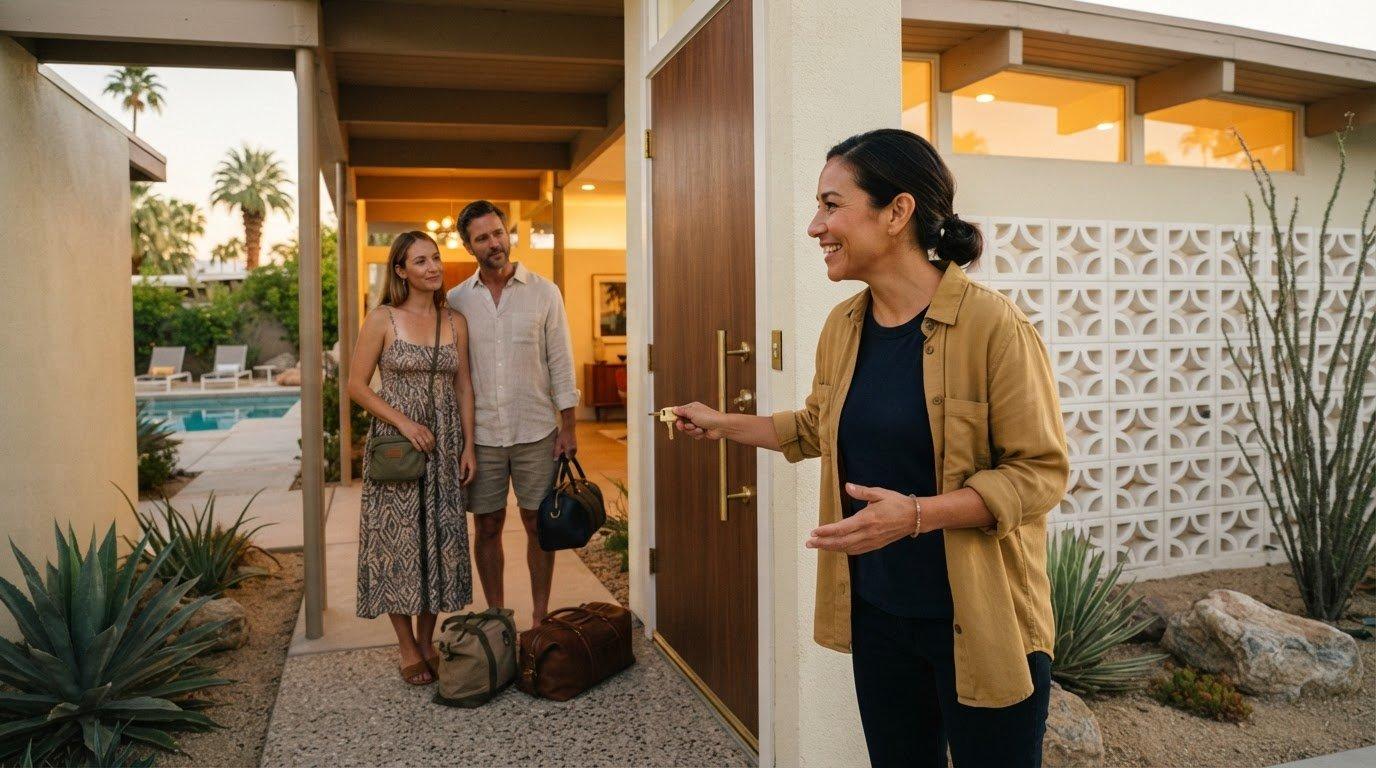
The first hour in a property carries disproportionate weight. Guests are arriving with luggage, groceries, children, work calls, or the fatigue of a long drive. They should not need to decode access instructions or search for basic information in a long message thread.
Clear pre-arrival communication should cover the essentials: how to enter, where to park, what to do if something does not work, and the few house rules that genuinely protect the property. It should also distinguish between useful guidance and unnecessary warnings. A lengthy list of penalties may protect a manager on paper, but it can make respectful guests feel unwelcome before they enter.
The right balance is firm and hospitable. Explain the standard, explain why it exists where appropriate, and make it easy to follow. For example, pool guidance, quiet hours, and parking rules should be simple enough that a guest can act on them without asking three follow-up questions.
Respond Early Enough to Change the Outcome
A guest rarely leaves a negative review because one small item went wrong. More often, the issue became a negative review because no one took ownership of it quickly enough.
That does not mean every concern requires an instant replacement, refund, or major intervention. Homes are physical assets. Appliances fail, weather interrupts plans, and some repairs require scheduling. The standard is honest communication, a proportionate response, and follow-through.
If an issue can be resolved that day, say so and confirm when it is complete. If it cannot, explain the practical options rather than offering vague reassurance. Guests are generally more reasonable when they believe someone understands the inconvenience and is handling it.
For owners, this is where senior oversight matters. A review-sensitive operation cannot rely solely on scripted replies or a distant ticket queue. Someone needs the judgment to decide when a small inconvenience is manageable, when it threatens the stay, and when a maintenance pattern needs to be addressed before the next arrival.
Treat Cleanliness as a System, Not a Final Look
Cleanliness remains one of the fastest ways to lose trust because guests can assess it immediately. Yet the answer is not simply asking a cleaner to work harder. Consistent housekeeping depends on a documented turnover standard, enough time between guests when the home requires it, quality control, and a way to catch small misses before check-in.
Owners should pay particular attention to the details guests touch or notice first: linens, bathrooms, kitchen tools, outdoor furniture, entry areas, remote controls, and signs of deferred repair. A beautifully designed room can still feel neglected if a lamp is broken, a cabinet sticks, or the patio cushions are weathered.
Reviews often identify these details before an owner sees them. The disciplined response is not to defend the home. It is to determine whether the feedback points to a one-time miss, a vendor issue, or a budget decision that should be revisited.
Ask for Reviews Without Chasing Them
A review request should be brief, personal in tone, and sent after the guest has had time to settle home. The point is to invite an honest account, not pressure someone into a rating.
Avoid language that assumes a five-star review, promises a benefit in exchange for feedback, or turns a courteous request into a campaign. Guests recognize when they are being managed. They also recognize a sincere note from a host who cared about their stay.
It helps to separate two questions. Ask privately for any information that would help improve the property, while still inviting a public review if the guest is comfortable sharing their experience. Some guests will raise an issue only after departure. That feedback may not change the completed stay, but it can protect the next one.
Reply to Public Reviews for Future Guests
Public responses are not primarily for the reviewer. They are for the next guest deciding whether to trust the home and the operator behind it.
For positive reviews, a concise thank-you is enough. Refer to a genuine detail if one stands out, but do not repeat the entire review or turn the reply into promotional copy.
For critical reviews, respond calmly and only after confirming the facts. Acknowledge the guest’s experience, state what was addressed if appropriate, and avoid arguing point by point. If feedback is inaccurate, a measured correction may be warranted, but defensiveness usually creates more doubt than the original complaint.
A useful test is this: would a reasonable future guest feel reassured after reading the reply? If the answer is no, revise it.
Use Review Patterns to Protect the Asset
The highest-value review work happens away from the public page. Review feedback should be assessed in regular operating conversations alongside maintenance records, housekeeping notes, and booking patterns. One complaint may be subjective. Three similar comments over several months are a management issue.
Look for patterns in arrival, cleanliness, comfort, noise, amenities, and communication. Then assign an owner, a deadline, and a clear standard for the correction. Some fixes are inexpensive. Others require a meaningful investment, such as replacing worn furniture, improving window coverings, or updating a key appliance. The right choice depends on the home, its rate position, and how directly the issue affects guest confidence.
A property does not need to be perfect to earn strong reviews. It does need to be honestly presented, consistently maintained, and responsibly managed when real life intervenes. That is how reviews become more than a score. They become evidence that the home is being stewarded with care.
If you are concerned that recurring guest feedback is costing your property bookings or creating avoidable wear, talk with Allura about the house itself. The right review strategy starts with an honest look at what guests are experiencing.
Related Articles
Continue reading about this topic.
Need Help Managing Your Rental?
Our team has 13+ years of experience improving revenue for California vacation rental owners.